How AI in Language Education Really Helps
18 de junio de 2026
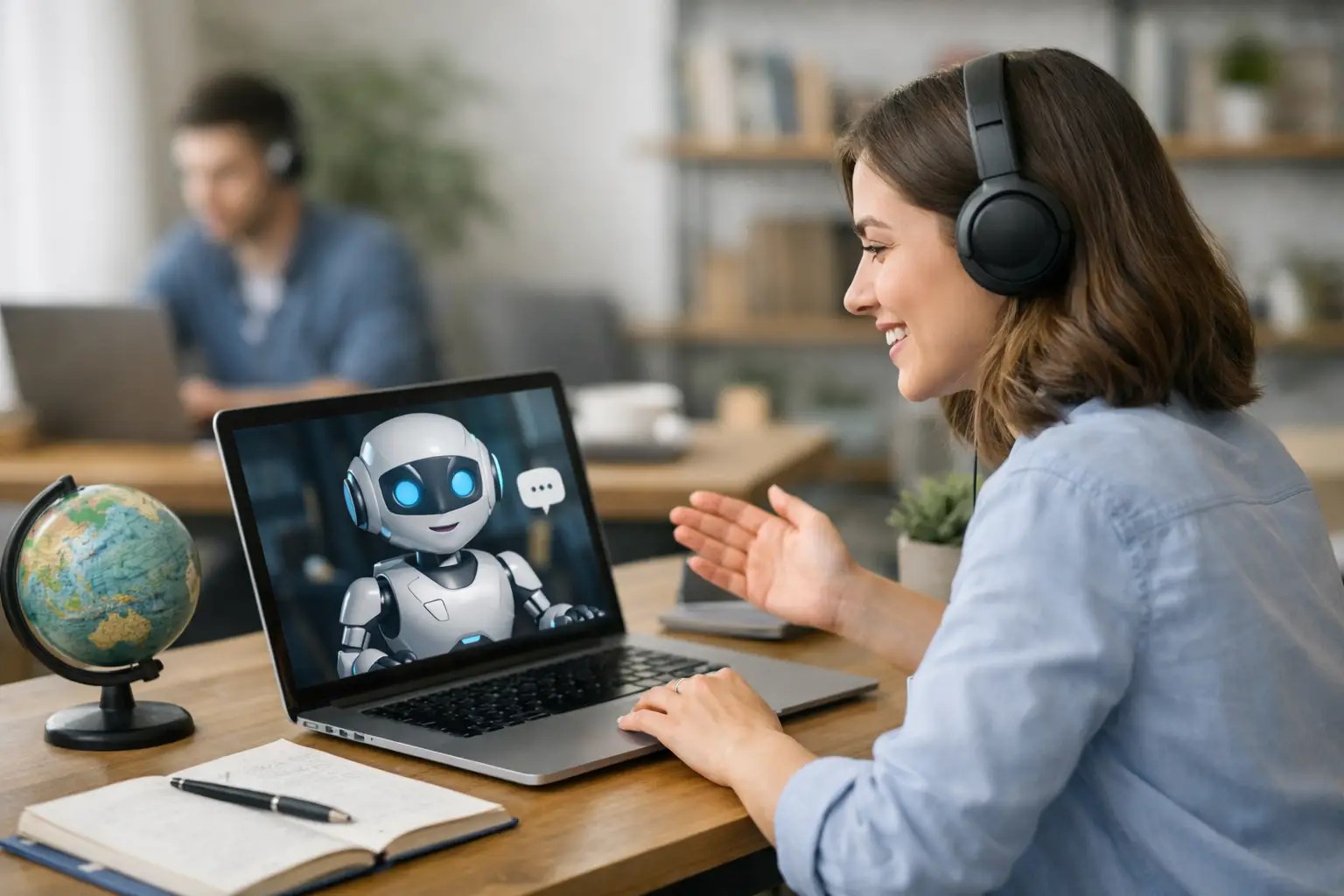
Picture a student who understands almost everything in class but freezes the second it is time to speak. That gap is exactly where ai in language education is starting to make a real difference. Not because technology can replace great teaching, but because it can give learners more chances to practice, get feedback, and build confidence in ways that feel immediate and personal.
For language learners, confidence is rarely just about knowing more vocabulary. It comes from using the language often enough that it starts to feel natural. That is why the most exciting role of AI is not flashy automation. It is the way it can support active learning, meaningful repetition, and personalized progress.
What AI in language education does best
At its best, AI helps teachers and students do more of what already works. It can generate extra speaking prompts, adapt reading passages to a student’s level, offer pronunciation feedback, and create targeted practice based on recurring mistakes. That matters because language learning is never one-size-fits-all.
A beginner needs support that feels clear and encouraging. An intermediate learner often needs help moving from passive understanding to active speaking. An advanced student may need refinement, nuance, and more natural expression. AI can respond to those differences quickly, which makes learning feel more tailored from the start.
That said, speed is not the same as quality. AI can produce exercises fast, but fast only helps when the material matches a learner’s goals. If a student wants to speak confidently with family members, prepare for travel, or use a language at work, the learning experience needs direction. Technology is strongest when it is guided by a thoughtful curriculum and a skilled teacher who understands the learner behind the screen.
Why personalization matters more than automation
Many students have tried language apps that promise progress in minutes a day, only to feel stuck when real conversation begins. The problem is not always effort. Often, it is that the practice stays too generic.
This is where AI becomes genuinely useful. Instead of offering the same sequence to everyone, it can help shape activities around actual needs. A child learning Spanish may need playful repetition, visual cues, and short speaking tasks. A busy adult studying English for work may need role-play around presentations, meetings, or client conversations. A heritage learner may understand the language well but need support with grammar, formal writing, or confidence in speaking.
Personalization changes motivation. When students see their lessons reflect their real lives, they engage more deeply. They are not just memorizing phrases. They are practicing language they can imagine using.
For a company like Mundo Languages, this kind of personalization fits naturally with a custom curriculum approach. AI can support dynamic lessons, but the real value comes from combining that support with materials designed around the learner’s level, goals, and learning style.
Where AI helps learners grow faster
The biggest advantage of AI is not that it knows everything. It is that it can create more opportunities for practice between teacher-led sessions. Language growth depends on frequency. Students improve when they interact with the language often, not only once or twice a week.
Speaking practice without the pressure
For many learners, speaking is the hardest part. They worry about getting the grammar wrong, forgetting a word, or sounding awkward. AI-powered tools can lower that emotional barrier by offering a space to rehearse before speaking with another person.
That practice matters. A student who has already tried a response out loud a few times is more likely to participate in class. The goal is not to hide from conversation. It is to prepare for it.
Feedback that arrives right away
Delayed feedback can slow momentum. If a student makes the same mistake ten times before anyone corrects it, the habit gets stronger. AI can help by flagging patterns in grammar, word choice, or pronunciation early.
Still, not all feedback is equally helpful. Sometimes an AI correction is technically accurate but not the most natural phrasing for the situation. That is one reason human instruction remains essential. Teachers provide context, tone, and cultural judgment that software still struggles to handle well.
More engaging review
Repetition is necessary, but boring repetition does not last. AI can help vary practice with dialogues, interactive prompts, level-adjusted readings, and personalized review activities. When review feels fresh, students are more likely to stay consistent.
Consistency is where confidence grows. Not in one perfect lesson, but in many small wins.
The limits of AI in language education
It is worth being honest here. AI is useful, but it is not magic.
Language is deeply human. It includes humor, hesitation, emotion, cultural nuance, and the ability to read a situation. A student does not just need to know which verb tense is correct. They need to know when a phrase sounds too formal, too blunt, too casual, or simply out of place.
AI can miss that. It may generate unnatural dialogue, oversimplify cultural context, or give feedback that sounds certain even when it is wrong. For beginners, that can be especially confusing because they may not know what to trust yet.
There is also the question of motivation. Technology can make learning easier to access, but it cannot build commitment on its own. Students still need structure, encouragement, and goals that matter to them personally. A strong teacher does more than explain language. They keep learners moving forward when progress feels slow.
This is why the best results usually come from a blended model. AI supports practice, personalization, and interaction. Teachers bring clarity, accountability, and the human connection that turns practice into real communication.
What families and adult learners should look for
Not every program using AI is using it well. The key question is not whether technology is included. It is how it supports learning outcomes.
A strong program should use AI to make lessons more responsive and interactive, not more impersonal. It should help students speak more, not just click more. It should fit inside a real learning plan, with clear goals and a curriculum that builds skills in a logical way.
For parents, that means looking for programs where AI supports engagement without replacing teacher guidance. Children benefit from interactive tools, but they also need encouragement, relationship, and lessons designed for how they actually learn.
For adults, it means choosing instruction that connects directly to real-life communication. If the technology helps you practice your next conversation, prepare for a trip, or express your thoughts more clearly, it is serving a real purpose. If it only gives you more isolated drills, its value is limited.
The future of language learning is more human, not less
There is a common fear that AI will make education colder or more mechanical. In language learning, the opposite can happen when it is used well. By handling certain repetitive tasks, AI can free up more space for teachers to focus on conversation, coaching, and meaningful interaction.
That is a better future for students. Less passive memorization. More real use. Less generic pacing. More instruction that meets learners where they are.
The most promising version of ai in language education is not about removing the teacher. It is about creating a learning experience that feels more responsive, more practical, and more encouraging. Students get targeted support. Teachers get better insight into where help is needed. Lessons become more active and memorable.
And that matters because language learning is not just about finishing units or collecting vocabulary. It is about reaching the point where you can speak up, connect, and feel like the language belongs to you.
That is the standard worth aiming for. If AI helps more learners get there with confidence, then it is not just a trend. It is a tool with real staying power.
¿Quieres practicar con una profesora?
Clases en vivo en siete idiomas, privadas o en grupos de máximo 4 personas. Tu primera clase te ubica en el nivel exacto donde estás.