How to Learn French Online and Stick With It
10 de junio de 2026
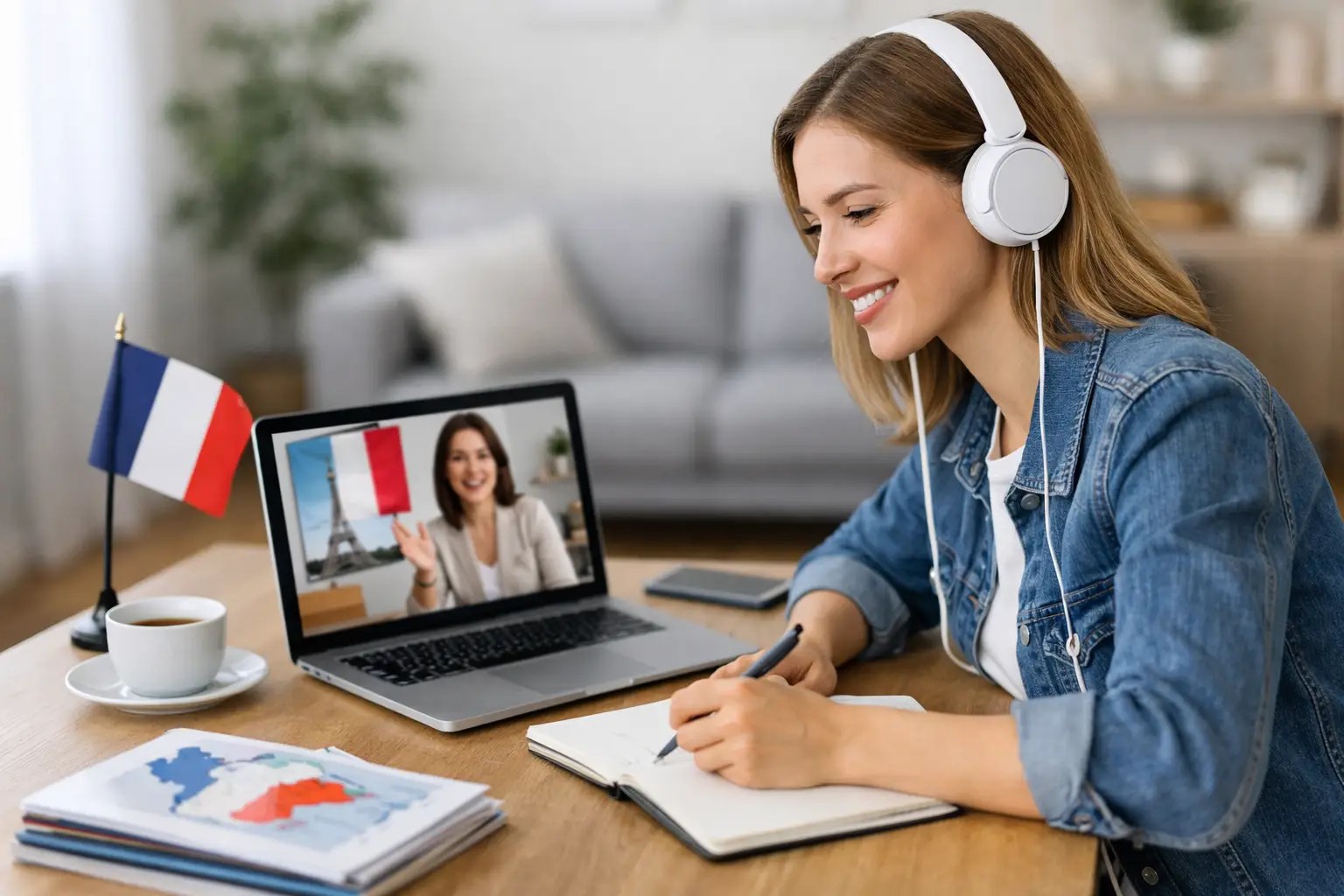
You do not need more French apps on your phone. You need a learning rhythm you will actually follow next week, next month, and long enough to start speaking with confidence. If you are wondering how to learn French online, the real answer is not finding the one perfect tool. It is building a smart mix of structure, speaking practice, and daily exposure that fits your life.
That matters because online learning can be amazing or frustrating, depending on how you use it. Some learners make fast progress from home. Others spend months tapping through vocabulary drills and still freeze when it is time to speak. The difference is usually not talent. It is method.
How to learn French online without wasting time
The biggest mistake most learners make is treating French like a collection of random activities. A video here, a flashcard deck there, maybe a podcast on the weekend. That can feel productive, but it often creates passive familiarity instead of real communication.
A better approach is to build your learning around three connected goals: understand what you hear, express what you mean, and remember enough to do it again tomorrow. When your study routine supports all three, online learning starts to feel practical instead of scattered.
This is where structure helps. You do not need a rigid school-style program, but you do need a path. Beginners need guidance on what to learn first. Intermediate learners need help closing gaps and turning knowledge into fluent speech. Advanced learners need refinement, precision, and more natural expression. The best online French learning plan meets you where you are rather than forcing everyone through the same sequence.
Start with the outcome, not the app
Before you choose materials, decide what success actually looks like for you. Do you want to hold a conversation while traveling? Speak with family members? Prepare for school, work, or an exam? Feel comfortable understanding native content? Your answer shapes everything.
If your goal is conversation, your plan should include live speaking from the beginning, even if it feels intimidating. If your goal is reading and listening comprehension, you may spend more time with texts and audio, but speaking still matters because it strengthens recall and confidence. If you are learning French for your child or teen, engagement matters even more. Young learners usually progress best when lessons feel dynamic, interactive, and connected to real interests.
This is one reason one-size-fits-all platforms often stall progress. They are convenient, but convenience is not the same as personalization. A learner who already understands basic grammar but hesitates to speak needs a different plan than someone starting from zero.
Build a weekly plan you can keep
Consistency beats intensity almost every time. A three-hour French marathon once a week is less effective than shorter, focused sessions spread across your week. Online learning works best when French becomes part of your regular routine rather than a project you keep restarting.
For most adults, a realistic weekly plan includes two or three structured study sessions, one or two speaking opportunities, and small daily exposure. That exposure can be ten minutes of listening, reading a short dialogue, reviewing vocabulary in context, or repeating useful phrases out loud. The goal is not to do everything. The goal is to stay in contact with the language often enough that it starts to feel familiar.
For children and teens, shorter sessions usually work better, especially when they include variety. Attention grows when learners interact, respond, create, and use the language instead of only memorizing it.
The key is to make your plan specific. “Study French more” is too vague. “Practice Tuesday and Thursday at 7 p.m., speak on Saturday morning, and listen for ten minutes during lunch” is far more likely to happen.
Speaking has to be part of your plan
Many people try to learn French online by avoiding the part that feels hardest. They read, listen, and review grammar for months before they try to speak. It feels safer, but it usually delays progress.
Speaking early does not mean speaking perfectly. It means getting used to building sentences, hearing your own voice in French, and making meaning in real time. That is how confidence grows. Not all at once, but through repetition.
A good teacher can make this process much less stressful. Personalized instruction helps because someone can adjust the pace, correct what matters most, and give you language you can use immediately. That is especially valuable if you have studied before and still feel stuck between understanding and speaking. With the right support, that gap is fixable.
At Mundo Languages, this is exactly where a personalized curriculum and dynamic teaching approach can make a difference. Instead of pushing learners through generic exercises, the focus is on practical communication, active participation, and building the confidence to use French in real situations.
Choose materials that create active learning
Not every online resource teaches in the same way. Some are useful for exposure. Others are better for skill-building. The strongest learning plan combines both, but active learning should lead.
Active learning means you are not only consuming French. You are answering questions, describing ideas, repeating with purpose, writing short responses, role-playing, noticing patterns, and using vocabulary in context. Project-based learning can be especially effective because it gives language a job to do. When learners create, present, compare, explain, or solve something in French, the language becomes more memorable.
AI tools can help here too, but only when used thoughtfully. They can support practice, provide instant feedback, and create interactive exercises. They are not a replacement for expert instruction or meaningful conversation, but they can make online learning more responsive and engaging between lessons.
Grammar matters, but it is not the whole story
A lot of learners swing between two extremes. They either obsess over grammar and never speak, or they ignore grammar completely and get stuck repeating the same basic errors. The better path is balanced.
You do need grammar, because it helps you understand how French works. But grammar should support communication, not replace it. Learn the patterns that help you say more, then use them right away in speech and writing. If you study the present tense, talk about your routine. If you learn past events, tell a short story. If you practice question forms, use them in conversation.
This is one reason customized lessons are so effective. The teacher can decide which grammar point will give you the biggest boost now, rather than flooding you with rules you are not ready to apply.
Motivation comes from momentum
Most people think motivation has to come first. Usually, it is the other way around. Motivation grows when you can feel yourself improving.
That is why small wins matter. Understanding a short audio clip. Introducing yourself smoothly. Ordering food in French during a role-play. Writing a message without translating every word. These moments are not minor. They are proof that the process is working.
If you have a history of starting and stopping language courses, try changing the expectation. Do not ask whether your French is “good” yet. Ask whether you can do a little more this week than last week. Progress in language learning is often quiet before it becomes obvious.
What to avoid when learning French online
The internet gives you access to almost everything, which is both helpful and distracting. Too many resources can create confusion instead of progress.
Try not to switch methods every time you feel bored or challenged. Do not measure yourself only by how many words you recognize. And do not wait until you feel ready to speak. Readiness usually follows action.
It also helps to avoid perfectionism. French pronunciation, listening speed, and grammar can feel demanding at first. That does not mean you are bad at languages. It means you are learning a real one. A good online program should stretch you without making you feel lost.
How to learn French online in a way that lasts
The best online French learning is not passive, generic, or built on streaks alone. It is structured enough to guide you, personal enough to keep you engaged, and practical enough to help you speak with real confidence.
If you want results that last, build your plan around consistent study, live interaction, useful feedback, and materials that match your level and goals. Let French become part of your week in a way that feels doable, not overwhelming. When learning feels personal and active, progress stops being something you hope for and starts becoming something you can hear in your own voice.
Give yourself permission to start where you are, not where you think you should be. A thoughtful online approach can take you much farther than scattered effort ever will.
¿Quieres practicar francés con una profesora?
Clases de francés en vivo, privadas o en grupos de máximo 4 personas. Tu primera clase te ubica en el nivel exacto donde estás.