Online Spanish Lessons for Beginners That Work
20 de julio de 2026
Your first real Spanish conversation should not have to wait until you have memorized hundreds of words. The best online Spanish lessons for beginners help you start communicating early, even if that means introducing yourself, ordering a coffee, or asking a simple question with a little nervousness and a growing smile.
Beginning Spanish can feel exciting one day and intimidating the next. You may recognize phrases from music, travel, or friends, yet freeze when it is time to respond. That is normal. Learning a language is not just about collecting vocabulary. It is about building the comfort to use what you know in real moments.
What Beginners Need From Online Spanish Lessons
A beginner course needs structure, but it should never feel like a stack of worksheets to get through alone. You need a clear path that shows what to learn first, why it matters, and how each skill connects to everyday communication.
The strongest lessons balance vocabulary, grammar, listening, pronunciation, reading, and speaking. More importantly, they bring those pieces together. Learning the word comida is useful. Using it to say what you like to eat, ask for a restaurant recommendation, or describe a family meal is where the word begins to stay with you.
Personalized instruction also makes a meaningful difference. A child learning Spanish for school will need a different approach than an adult preparing for travel, a professional connecting with clients, or a heritage learner hoping to speak more comfortably with family. A one-size-fits-all course can provide a starting point, but it may not address the situations that matter most to you.
Start Speaking Before You Feel Perfect
Many beginners make the same understandable mistake: they wait to speak until they feel fully ready. But confidence is not a reward that appears after perfection. It grows through practice.
Early speaking activities should be manageable and encouraging. You might practice greetings, talk about your routine, describe people you know, or role-play a short conversation at a store. These small wins teach your brain that Spanish is something you can use, not simply something you study.
A supportive teacher can correct errors without interrupting every thought. Some mistakes need immediate attention because they affect meaning or pronunciation. Others can wait until you finish speaking. The goal is not to make every sentence flawless. The goal is to help you express yourself more clearly each time.
How Online Spanish Lessons for Beginners Build Confidence
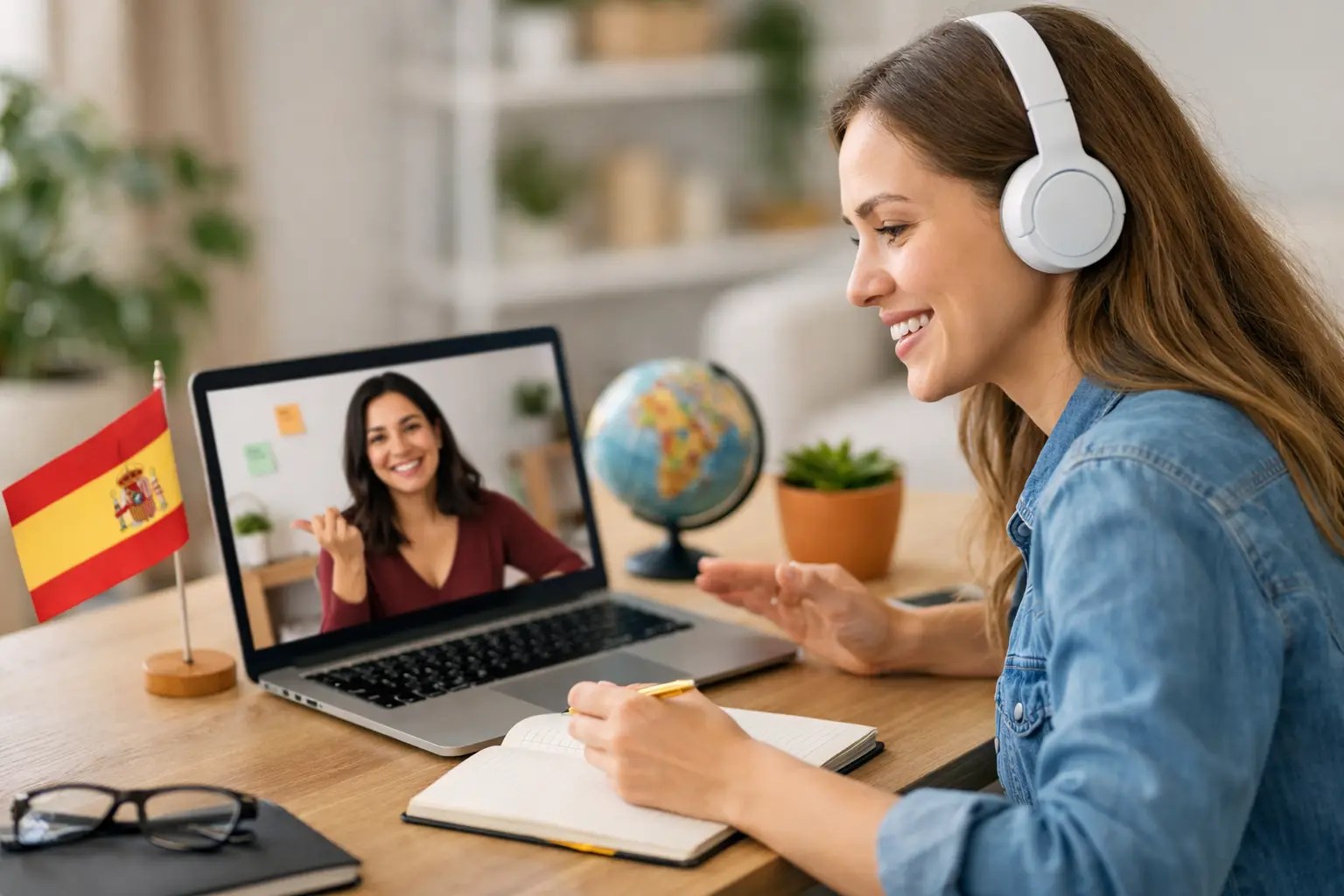
Online learning works especially well when it creates active participation rather than passive screen time. Watching videos and using an app can introduce useful phrases, but conversation requires a different kind of practice. You need to listen, respond, ask questions, and adjust when someone answers in an unexpected way.
Live instruction gives beginners a reliable place to do that. Instead of wondering whether you pronounced a word correctly, you can receive clear feedback. Instead of moving through a generic lesson too quickly or too slowly, you can spend time where you need it most.
At Mundo Languages, personalized lessons are built around proprietary curriculum and engaging activities that make Spanish practical from the beginning. Dynamic teaching, project-based learning, and thoughtful AI-supported activities can give students more ways to practice, create, and remember what they are learning.
That does not mean every lesson needs to be packed with technology or complicated projects. Sometimes the most valuable work is a simple conversation about your weekend. The right mix depends on your goals, learning style, and schedule. Technology should support human connection and meaningful practice, not replace either one.
Make Grammar Useful, Not Overwhelming
Spanish grammar has patterns that may be new to English speakers. Nouns have gender. Adjectives often change to match nouns. Verbs shift depending on who is doing the action and when it happens. At first, that can seem like a lot.
The answer is not to avoid grammar. Grammar helps you make sense of Spanish and say more than memorized phrases. The key is learning it in useful portions.
For example, you do not need every form of every verb before you can talk about your day. Start with high-frequency verbs such as ser, estar, tener, querer, ir, and hacer. Practice them in sentences that reflect your life: “I am tired,” “I want to learn Spanish,” “I am going to work,” or “We have two dogs.” As your vocabulary grows, the patterns become more familiar.
A good beginner program explains the why behind grammar, then gives you plenty of opportunities to apply it. You should leave a lesson able to do something with the new concept, not simply identify it on a quiz.
A Realistic Routine for Steady Progress
Consistency matters more than marathon study sessions. An hour once a week can help, but a short daily connection with Spanish makes it easier to retain what you learn and return to it with confidence.
Try to create a routine that fits your real life. After a live lesson, spend a few minutes reviewing key phrases aloud. Listen to beginner-friendly Spanish while commuting or doing chores. Label a few items around your home. Write three short sentences about your day. Small actions add up because they keep Spanish present between lessons.
It also helps to revisit material rather than racing ahead. Beginners often think progress means constantly learning new words. In reality, progress also means using familiar words faster, with better pronunciation and less hesitation. Repetition is not falling behind. It is how knowledge becomes usable.
If your schedule is demanding, focus on a simple rhythm: attend your lesson, review what you learned, and use one new phrase in context. A routine you can maintain is far more valuable than an ambitious plan you abandon after two weeks.
Choose Lessons That Match Your Goal
Before enrolling, ask what you want Spanish to help you do. “Become fluent” is a meaningful long-term dream, but it is too broad to guide your first steps. A clearer goal might be speaking with relatives, feeling comfortable on an upcoming trip, helping your child with school, or participating more confidently at work.
Your goal shapes what effective practice looks like. A traveler may need greetings, directions, restaurant language, and confidence navigating short exchanges. A heritage learner may understand a great deal already but need help forming sentences and speaking without self-consciousness. A complete beginner may need extra pronunciation support and a slower introduction to grammar.
Look for instruction that adapts as you grow. Your needs in month one will not be the same as your needs after you can hold a basic conversation. Personalized learning should leave room for questions, changing goals, and the occasional lesson spent strengthening a skill that has not clicked yet.
Common Beginner Worries, Answered
“I am too old to learn Spanish” is one of the most common concerns, and it is not a reason to wait. Adults may have less free time than children, but they also bring motivation, life experience, and the ability to connect new language to real goals. Progress may look different for every learner, but meaningful progress is possible at any age.
“I have a bad accent” usually means “I am afraid of being judged.” Pronunciation improves through listening, repetition, and kind feedback. You do not need to sound exactly like a native speaker to be understood, appreciated, and confident in conversation.
“I do not have enough time” may be true in the sense that you cannot spend hours studying each day. But you may have enough time for a focused lesson and a few short practice moments each week. The best plan respects your schedule instead of making you feel guilty about it.
Spanish is not learned in one dramatic breakthrough. It is built through many small moments: the first greeting you say without translating, the first question you understand on the spot, the first time you laugh during a conversation instead of worrying about every verb. Give yourself permission to begin there. Every phrase you use is proof that the language is becoming yours.
¿Quieres practicar español con una profesora?
Clases de español en vivo, privadas o en grupos de máximo 4 personas. Tu primera clase te ubica en el nivel exacto donde estás.